Description
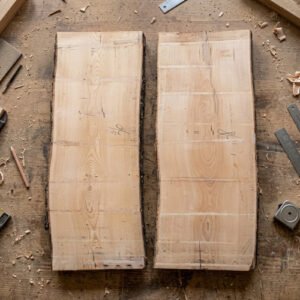
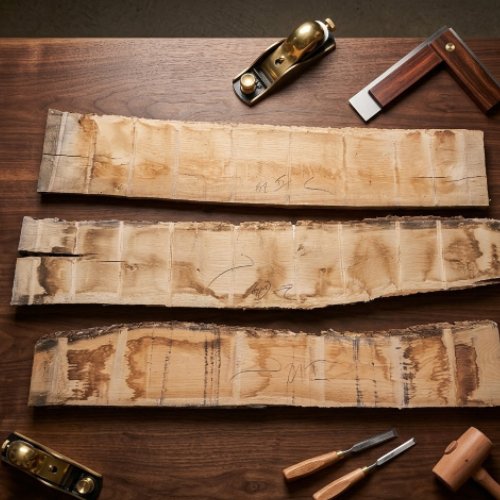
OAK TIMBER KD 8-12% UNEDGED
26, 32, 38, 50mm2 & others
CLASS A

Acceptable – sound knots, with a diameter of up to 10mm, and winged knots on boards wider than 200mm; a maximum of 60mm is permitted for every 1m length. False heartwood can occupy up to 1/4 of the board’s width, with a one-sided curvature of 3cm for every 1m length. Straight cracks are permissible up to 1/10 of the length. Discoloration due to tannic acid may occur.
CLASS B

Acceptable
sound knots, with a diameter of up to 20mm, winged knots on boards wider than 200mm; a maximum of 80mm is permitted for every 1m length. False heartwood can occupy up to 2/3 of the board’s width, with one-sided curvature of 7cm for every 1m length. Defective knots may appear with a diameter of up to 50mm for each 1m length. Straight cracks are permissible up to 1/5 of the length. Tannic acid discoloration may be present.
CLASS C

Acceptable
sound knots, with a diameter of up to 50mm, and winged knots on boards wider than 200mm. A total diameter of up to 300mm is permissible. False heartwood may be present, along with a one-sided curvature of 10cm for every 1m in length. Spoiled knots may be present. Spoiled knots may be present. The internal sapwood is healthy. Straight cracks are possible, extending up to 1/3 of the length. Tannic discoloration may occur. The interior sapwood is healthy up to 1/2 of the board thickness. The inner sapwood is healthy.
The primary distribution of commercially utilized oak is found in Europe. Two species of oak are evaluated together,Although the wood texture of species appears identical, anatomical differences can be observed, albeit not with precision. Hybrids of these species are extensively prevalent. Oak trees can attain heights of up to 40 meters and diameters exceeding 2 meters.
Application of Oak
Large diameter oak logs are predominantly employed in the veneer industry. Oak lumber is primarily utilized for furniture, flooring, joinery, and construction lumber. Additionally, oak is utilized in the production of barrels, which are essential for processing wine and liquor, imparting a distinctive flavor attributed to tannin.
Characteristics of Oak
The color of the heartwood ranges from light to medium brown. The sapwood, which is nearly white to light brown, is not always distinctly separated from the heartwood. Quarter sawn sections exhibit prominent ray patterns. The wood yields favorable results when worked with both hand and machine tools. Oak possesses a moderately high shrinkage value, leading to moderate dimensional stability, particularly in flatsawn boards. It can react with iron, especially when wet, resulting in staining and discoloration.
Gross density: (12-15%): 450 – 690 – 960 kg/m³
Compressive strength: 50 – 65 – 75 N/mm²
Bending strength: 75 – 85 – 110 N/mm²